
Distracted Driving Accident Lawyer: Texting & Phone-Related Crashes in Texas
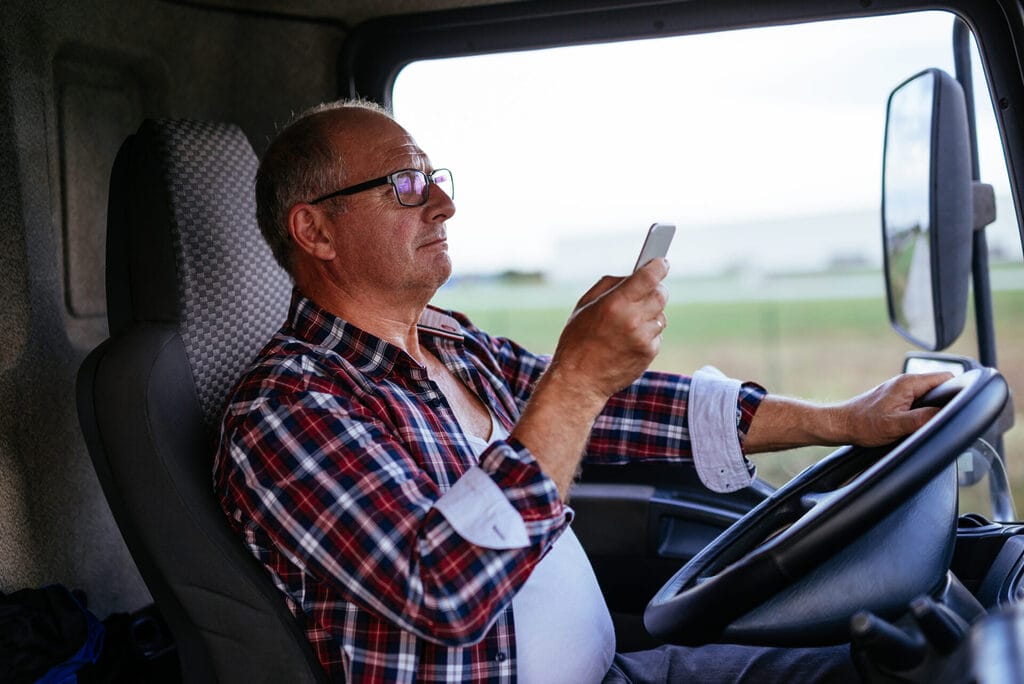
Texting while driving has been illegal in Texas since 2017, yet according to the most recent data, distracted driving still caused more than 94,000 crashes in the state in 2023. Most of the drivers who cause them will never admit they were looking at their phone.
If a distracted driver hit you, the right evidence can prove what happened. Here's how distracted driving accident claims work in Texas, what the law says, and how we prove a driver was on the phone.
100% Free Consultation
The short version
- Texas bans reading, writing or sending electronic messages while driving, statewide.
- Handheld phone use is also banned in active school zones, and drivers under 18 can't use phones at all.
- A texting ticket isn't required to win your injury case — but phone evidence can make it.
- Phone records, vehicle data, video and witnesses can prove distraction. Save them early.
- If the driver was working, their employer may be responsible too.
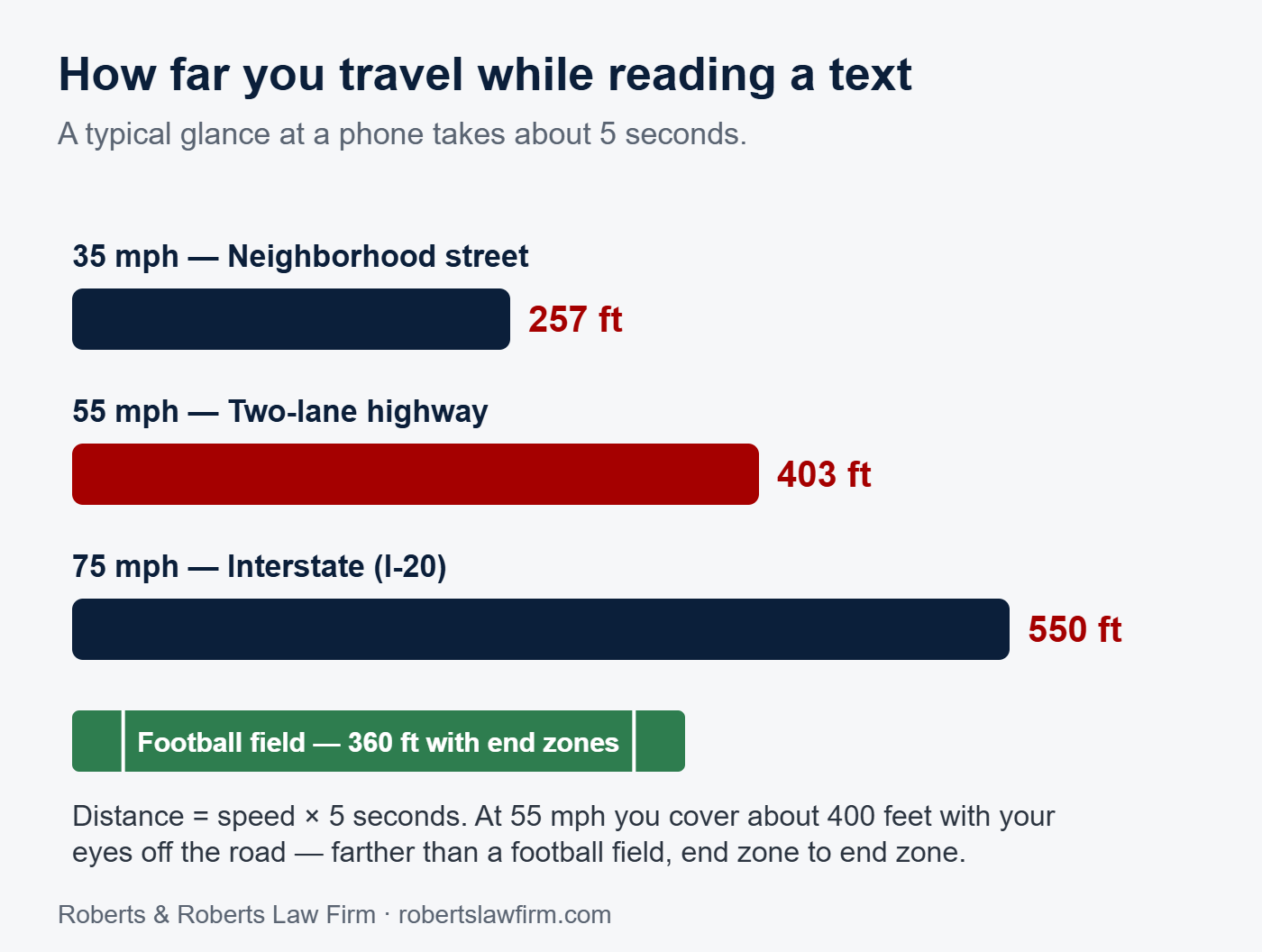
Why a few seconds matters
What Texas law says about phones and driving
| Rule | Who it applies to |
|---|---|
| No texting, reading or sending messages while driving | All drivers, statewide (since September 1, 2017) |
| No handheld phone use in active school zones | All drivers (§ 545.425) |
| No wireless device use at all while driving | Drivers under 18, and bus drivers carrying minors |
| Higher penalties | When a texting driver causes a crash that seriously injures or kills someone |
Distraction isn't just phones. Eating, adjusting a screen, reaching for something, or watching a passenger instead of the road all count — and so does an in-dash touchscreen.
How we prove a driver was distracted
- Cell phone records showing texts, calls and data use at the moment of the crash
- Vehicle and infotainment data — some cars log phone connections and screen activity
- Event data recorders showing no braking before impact (see black box data)
- Video from dash cams, businesses and traffic cameras
- Witnesses who saw the driver looking down
- The driver's own words at the scene, often recorded on officer body cameras
Act quickly. Phone carriers keep some records for limited periods, and video is often overwritten within days. A lawyer can send preservation letters and, once suit is filed, subpoena the records.
From our files: A surprising number of the people who call us say the other driver admitted it at the scene ("I'm sorry, I was looking at my phone") and some of those drivers were even ticketed for it.
That admission matters, but it can be denied later. So we lock it down: the crash report and any citation, the witnesses who heard it, dashcam and nearby business video, and, when the case warrants it, the driver's phone records matched to the moment of the crash.
When the employer is responsible
Delivery drivers, sales reps and truckers often use phones for work. If the driver was on the job, the employer may be liable for the crash — and a company that expects employees to answer texts or dispatch messages while driving may be directly negligent. Commercial truck drivers are also barred by federal rules from texting or using handheld phones while driving.
What you can recover
Medical bills, lost wages and earning capacity, pain, mental anguish, physical impairment and disfigurement — and property damage, including diminished value. Families who lose someone may have a wrongful death claim.
Frequently asked questions
The driver didn't get a ticket for texting. Can I still prove it?
Yes. Officers often can't confirm phone use at the scene. Phone records and other evidence gathered later can prove it in a civil case.
Can I get the other driver's phone records?
Usually through a subpoena once a lawsuit is filed, limited to the time around the crash. A preservation letter should go out early.
Is talking on a hands-free phone illegal in Texas?
Hands-free use is generally allowed for adult drivers outside school zones, but it can still be evidence of distraction.
I was rear-ended by someone on their phone. Is that an easy case?
Rear-end crashes are often clear on fault, but insurers still fight over injuries and damages. Documentation matters.
Hit by a distracted driver?
We'll move fast to preserve the phone and vehicle evidence. Free consultation; no fee unless we recover. Call (800) 248-6000.
About The Author

- Texas Department of Transportation, Distracted Driving fact sheet (2023 data); Texas Motor Vehicle Traffic Crash Facts, Calendar Year 2024.
- Tex. Transp. Code §§ 545.424, 545.425, 545.4251.
- 49 C.F.R. §§ 392.80, 392.82 (commercial drivers: texting and handheld phones).