
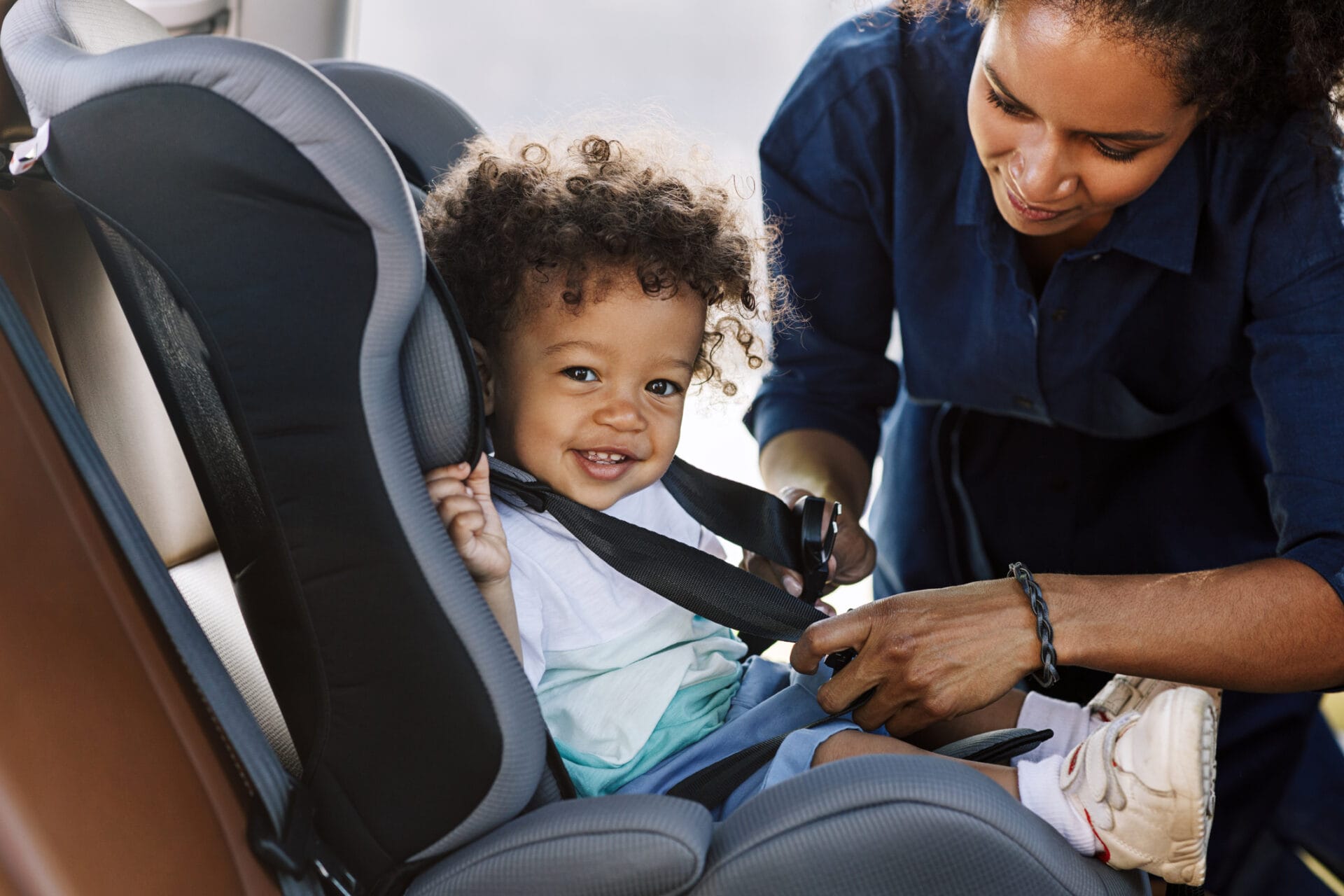
A new federal safety standard for children's car seats takes effect on December 5, 2026. Starting that day, car seats made for younger children must pass a side-impact crash test for the first time, along with an updated frontal crash test. If you have little ones in East Texas, here is what is changing, and what it does and doesn't mean for the seat already buckled into your back seat.
What's Changing on December 5
- A new side-impact test. Under the National Highway Traffic Safety Administration's new standard (FMVSS 213a), car seats for children under about 40 pounds or 43 inches tall must be tested in a simulated "T-bone" crash, with a vehicle seat and door built into the test sled. The goal is to keep a child's head from striking the door and to reduce crash forces on the chest.
- An updated frontal test. The frontal crash test (FMVSS 213b) now uses a test seat that better matches the back seat of a modern vehicle, and a lap-and-shoulder belt for most seats.
- New labeling minimums. Manufacturers must list a minimum weight of 26.5 pounds for forward-facing use and 40 pounds for booster use. These are minimums, not signals to move a child up. Safety experts still recommend keeping children in each stage for as long as they fit within the seat's limits.
Side impacts are among the most dangerous crashes for young children because there is so little space between the child and the striking vehicle. Many manufacturers already met the new standard early.
Do You Need to Buy a New Car Seat?
No. The new rule applies to seats manufactured and sold after the deadline. It does not require families to replace seats they already own. According to NHTSA, today's car seats are highly effective at preventing death and serious injury. The bigger risk is a seat that is expired, recalled or installed incorrectly.
A Quick Car Seat Check for Parents
- Check the expiration date. It is usually printed on a label on the seat or molded into the plastic shell.
- Check for recalls on NHTSA's website, and register your seat with the manufacturer so you are notified of future recalls.
- Make sure it fits your child. Follow the height and weight limits on the label, and keep children rear-facing as long as the seat allows.
- Check the installation. The seat should not move more than an inch side to side at the belt path. A certified child passenger safety technician can check it for free; NHTSA's inspection station locator lists locations across East Texas.
- Shopping for a new seat? If it is not clear from the box, ask the retailer or manufacturer whether the model meets the new side-impact standard.
A Reminder About Texas Law
Texas law requires children younger than 8 to ride in a child safety seat or booster seat unless they are at least 4 feet, 9 inches tall. Children under 13 are safest in the back seat.
After a Crash
NHTSA recommends replacing a car seat after a moderate or severe crash, even if it looks fine. If your family is in a wreck, have your child checked by a doctor, keep the car seat, take photos of it, and save the receipt for any replacement. The at-fault driver's insurance may be responsible for replacing a damaged seat. There is no need to make any decisions right away.
More information: car seat and booster seat tips · car accidents · more safety tips
