
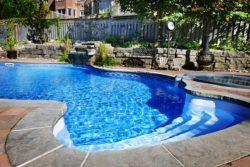
In Texas, having a pool at your home comes with a serious responsibility – making sure the water’s out of reach for unsupervised kids.
Texas law and local building codes require homeowners to install specific barriers to prevent accidental drownings. Whether you’re building a pool from scratch or maintaining an existing one, following these rules is crucial for both safety and avoiding costly legal headaches.
State Law vs. Local Ordinances – What’s the Legal Framework?
A lot of folks think there’s a single “pool law” that applies everywhere in Texas. But, in reality, the main state law on the topic (Texas Health and Safety Code Chapter 757) applies only to multi-unit rental complexes and property owners associations (HOAs) — it does not apply to private residential pools at single-family homes.
That said, many Texas cities have adopted modern safety standards – like the International Swimming Pool and Spa Code (ISPSC) or the International Residential Code (IRC) – into their local ordinances. So, even if you live in a city like Tyler or Dallas, local codes may make strict barrier requirements the law of the land.
Barrier Standards for Residential Pool Safety
While you should always check in with your local building department, many Texas municipalities enforce the following standards for residential pool barriers:
- Minimum height: Barriers generally need to be at least 48 inches (4 feet) high – measured from the ground level on the side that faces away from the pool.
- The 4-inch gap rule: There can’t be any gaps in the fence or under the barrier that would allow a 4-inch diameter ball to squeeze through. And, in some jurisdictions, the gap at the bottom of the fence (between the barrier and the ground) may be limited to 2 inches.
- Climb-resistance: Fences can’t have horizontal rails or other features that make it too easy to climb. If a fence has horizontal members less than 45 inches apart, those members must be placed on the pool side of the barrier (rather than the outside), to eliminate footholds for climbing children.
- Gate specs: All pedestrian gates generally have to:
- Swing outward (away from the pool).
- Be self-closing and self-latching.
- Have the latch mechanism located at least 54 inches above the ground, or on the pool side of the gate if the latch is positioned lower than 54 inches. (Check your local jurisdiction, as some areas may require 60 inches.)
- Material restrictions: Some jurisdictions restrict or prohibit certain types of chain-link fencing for pool barriers because they may be considered too climbable unless they meet specific mesh and design requirements.
Above-Ground Pools and House Walls
If you have an above-ground pool, the ladder or steps generally need to be able to be secured, locked, or removed to prevent access.
If a wall of your house is part of the pool’s barrier, any door leading from the home to the pool area may need to have an audible alarm that sounds immediately when the door is opened. Any manual deactivation switch generally needs to be located at least 54 inches above the floor – out of reach of curious kids.
Building Your Pool – Inspections and Permits
In Texas, new residential pool construction commonly incorporates standards from the International Residential Code (IRC), International Swimming Pool and Spa Code (ISPSC), and National Electrical Code (NEC), as adopted by the local jurisdiction.
- Setbacks: Pools generally need to be at least 5 feet from property lines and a certain distance from house foundations to protect structural integrity.
- Electrical bonding: All metal components within 5 feet of the water generally need to be bonded to a common grounding system to help prevent electrocution.
- Inspections: Expect multiple inspections during construction – specifically for rebar, plumbing, and final safety barriers.
Liability and the “Attractive Nuisance” Doctrine
Even if you live in a rural area where local fencing ordinances are pretty lax, you’re not exempt from liability. Under the Attractive Nuisance Doctrine, a pool owner can be held liable for injuries to a trespassing child if they knew (or should have known) that kids were likely to trespass and failed to provide a reasonable barrier.
If a homeowner violates applicable residential pool safety laws or ordinances, those violations may be used as evidence of negligence in a personal injury or wrongful death lawsuit. Homeowners may also face municipal fines, enforcement actions, or permit complications for noncompliance with local codes.
Common Sense Measures for Pool Safety
Beyond just following the rules, there are some extra safety measures that can save lives:
- Visual barriers: Consider a solid wood fence to block the pool from view – making it less tempting for neighborhood kids.
- Secondary alarms: Use sub-surface pool alarms that sound when someone enters the water.
- Maintenance: Check your gates every month to make sure they still self-close and self-latch properly – as hinges can sag over time.
- Insurance Check: Review your homeowners insurance policy. Many providers require a compliant pool barrier as a condition of coverage; failing to maintain one could lead to coverage issues in the event of an accident.
Roberts & Roberts is here to lend a hand to families who have been harmed by accidents that just shouldn’t have happened because of someone else’s carelessness.
If you’re wondering what your legal options are, give us a call as soon as you can. We will be happy to set up a no-obligation consultation with our team of seasoned Texas personal injury attorneys and answer any questions you have.